Tokyo — Or, How I Spent Three Hours in a Starbucks Because I Was Too Scared to Leave
I arrived in Tokyo at 1 AM.
I was twenty-three years old.
I had never been to Japan.
I had never been anywhere quite like Japan.
I knew this theoretically.
Japan is different, people said.
Japan is unlike anywhere else, people said.
People were not wrong.
But theory and Shinjuku Station at 6 AM
after a sleepless night on a bus
are different categories of experience entirely.
I. The Bus
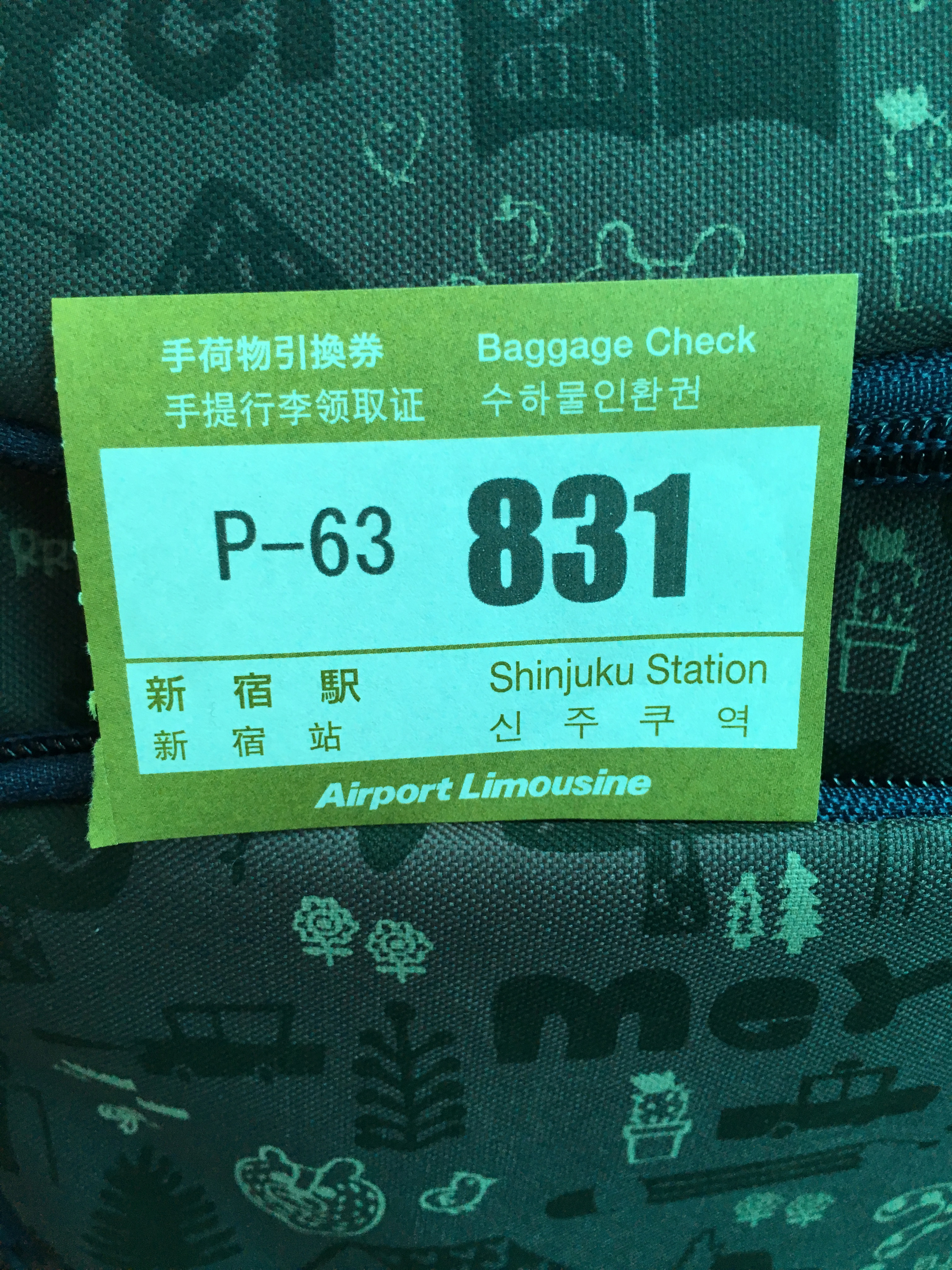
My first mistake: the bus.
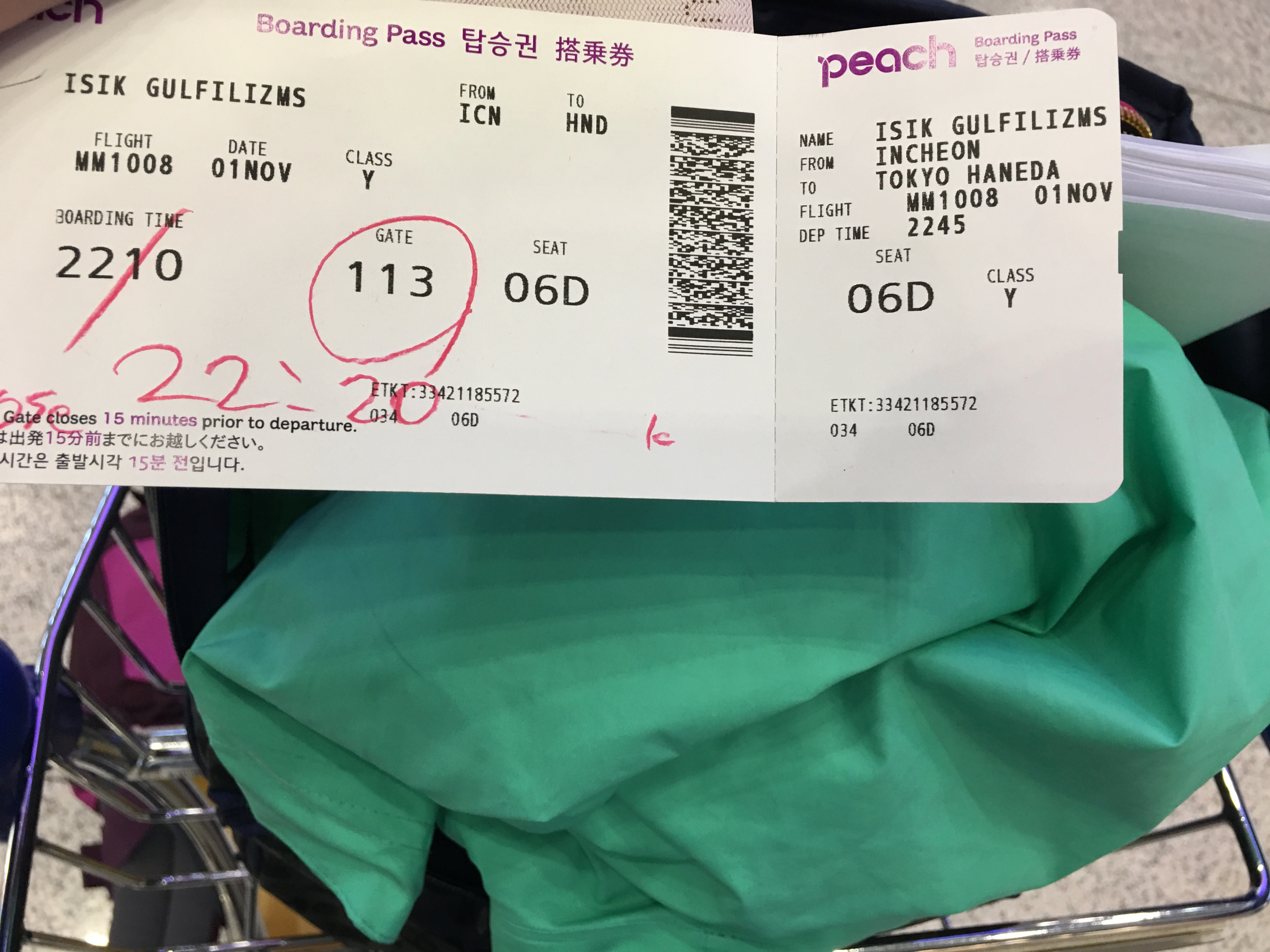
I landed at Haneda late at night — too late, I reasoned, to navigate an unfamiliar city to my hostel. I would sleep at the airport. I would take the bus in the morning.
This was a reasonable plan. It ignored one fact:
Tokyo has a train system so comprehensive, so frequent, so efficient,
that there is essentially no hour of the day at which you cannot get from anywhere to anywhere with minimal effort.
The bus was unnecessary. The bus was slow. The bus was, however, where I slept — deeply, completely, with the total surrender of someone who has been awake for twenty hours.
I woke up to a voice. “Shinjuku! Shinjuku!”
I grabbed my bag. I was off the bus before I was fully conscious.
I stood on a pavement in Tokyo and I had been awake for maybe thirty seconds.
My first thought, I am not exaggerating, was:
Am I still on Earth?
II. Shinjuku at Dawn
Shinjuku does not ease you in.
I came from a country where cities go to sleep at night.
This one clearly never had.
Shinjuku at 7 AM is already the most intense place you have ever been.
The scale: incomprehensible.
Buildings that seem to keep going up past the point where buildings should reasonably stop.
Signs everywhere, in scripts I couldn’t read, advertising things I couldn’t identify.
It was so grand. So crowded. So not of this world.
I got scared. Actually scared. Everyone was already out and moving,
like they all knew exactly where to go.
And the sound. Not loud, but everywhere. A city-sound I had never heard before.
I walked for about ten minutes in pure shock,
and then I did what any reasonable person does
when the world stops making sense:
I ducked into the first café I saw.
III. The Café ( And the Bell I Did Not Know About)
It had a coffee logo. This was sufficient qualification. (Hoshino Coffee to be specific!)
I sat down. I waited.
No one came.
I waited longer. I began to wonder if I had, somehow, become invisible. I was still in shock.
Then I noticed there was a little bell on the table. You’re supposed to press it.
I pressed it, very timidly.
In Japan, you don’t wait to be served. You ring the bell. The system makes perfect sense.
I had been sitting there for ten minutes, waiting to be served the European way, while the staff politely pretended not to notice my confusion.
The waitress came, also very timidly —
like she could tell
I didn’t know what I was doing
and was being gentle about it.
I tried to order a sandwich.
She said breakfast hours.
And that’s where I saw it. :) And now, you will see it too!
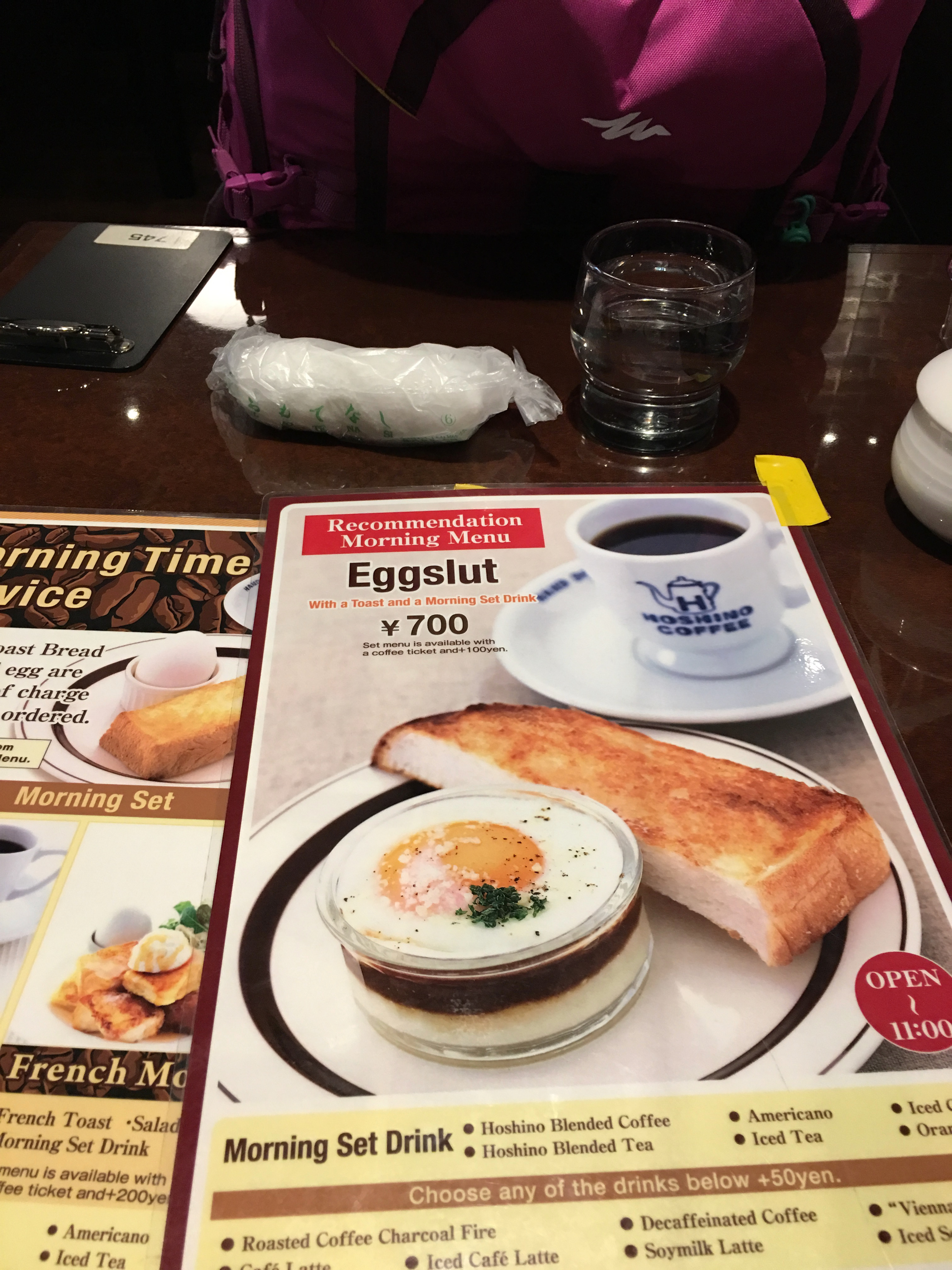
IV. Eggslut
I should explain.
I was hungry. I had been awake, with brief intervals of bus-sleep, for approximately twenty-two hours. I was raised in a culture where breakfast is a serious meal. A real one.
Turkish breakfast: multiple cheeses, olives, tomatoes, cucumbers, eggs prepared several ways, bread, butter, honey, jam, tea, possibly more tea, and the general understanding that one does not face the world without first sitting down properly.
I opened the menu.
I saw many things I did not recognize.
And then I saw, in English:
EGGSLUT
I stared.
Is this… food?
Is this a real thing?
You can just write that on a menu?
I ordered it.
Of course I ordered it.
I had been awake and unfed
for almost 24 hours.
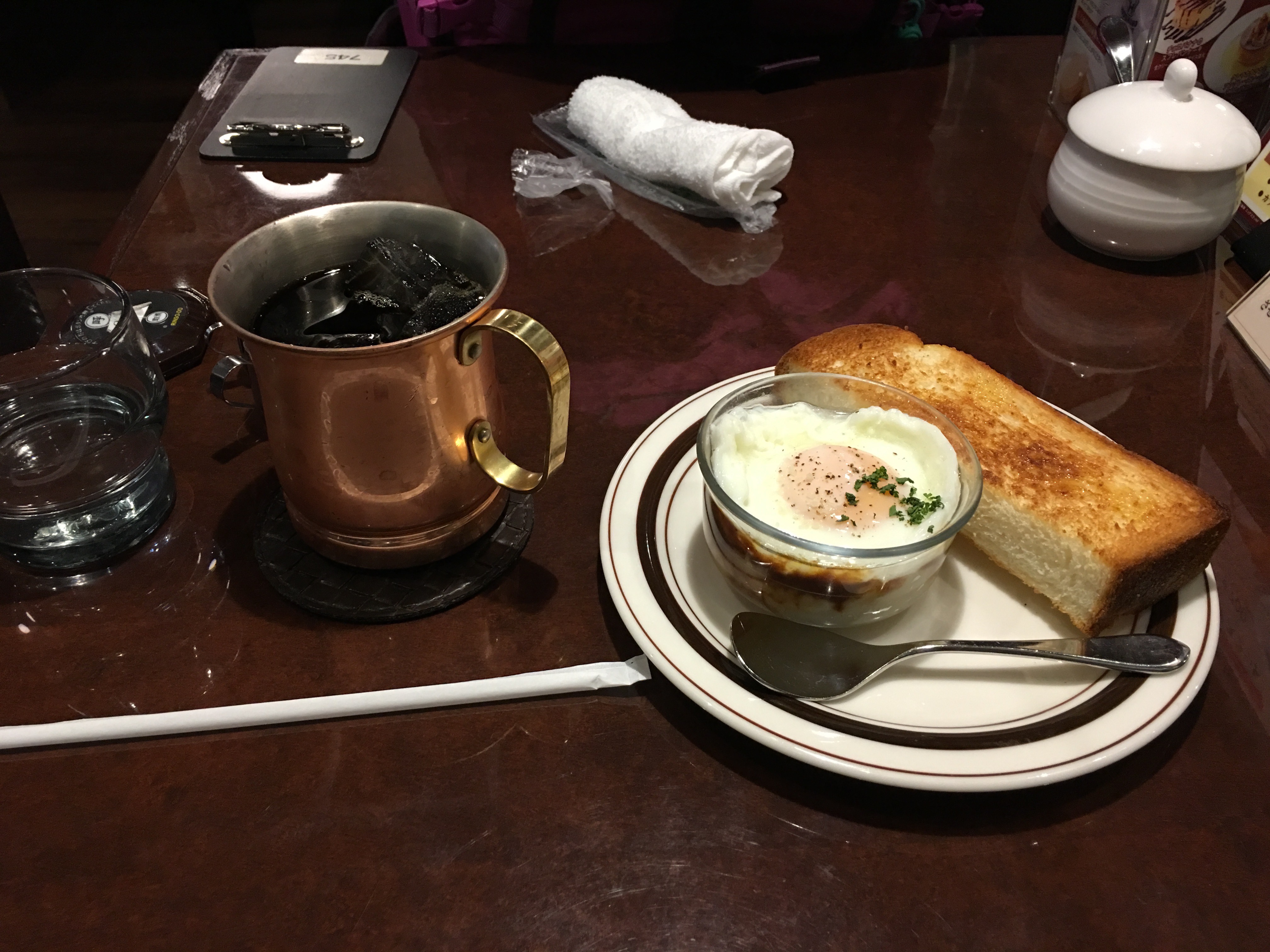
What else was I going to do. Reader, it was the size of my palm.
A small vessel. Soft egg. Something creamy. Something bread-adjacent on the side. 1/3 of a bread slice.
Exquisite, probably. Breakfast, technically.
I ate it in 3 bites. A dollhouse breakfast.
I ordered coffee. I sat there for a while, charmed and starving at the same time — which, honestly, is how Tokyo made me feel for the rest of the trip.
V. Three Alphabets (In One Sentence??)
Okay I should explain.
On the plane,
trying to be a responsible traveler,
I had learned that Japanese
has three writing systems:
Hiragana: 46 characters, for native Japanese words and grammar.
Katakana: 46 characters, for foreign loanwords.
Kanji: thousands of characters, borrowed from Chinese.
Fine. I had, on the plane, memorized hiragana and katakana. This took approximately twenty minutes. I was pleased with myself.
Then I walked outside into Shinjuku.
The signs were using all three at once.
In the same sign.
Sometimes in the same word.
I had assumed — naively, adorably —
that one sentence would use one alphabet.
Nobody warned me they’d use all three in one sentence, sometimes in one word, like it was the most normal thing in the world.
I stared at signs. I recognized some characters. I understood nothing.
(Kanji. It was kanji. A lot of kanji.)
VI. Sutābakkusu (スターバックス)
I panicked.
I had no internet.
No Google Translate.
No way to decipher anything.
So I decided:
I need something familiar.
I need Starbucks. ( Me, a slave of the capitalism, ahahha, I should write about this later!)
Not for the coffee —
for the green logo.
For the reassurance
of something I know exists on Earth.
I walked into Tokyo Station. ( 2nd biggest mistake after bus) :D
Tokyo Station is not a station.
It’s an underground city.
Platforms, passages, shops, restaurants, all of it humming away below ground,
and everyone moving through it knows exactly where they’re going.
I did not!
I looked for the green mermaid. I could not find it.
I stopped people. “Starbucks?” I said. With, I hoped, an international intonation that communicated friendly tourist, not threat.
“Sumimasen,” they said — excuse me — and walked away. Politely and kept walking.
In Japan, stopping a stranger on the street is not the done thing. This is not rudeness. It’s just not what you do here. I didn’t know that yet.
I kept trying. I showed people my phone with “Starbucks” typed on it.
Eventually: two young girls in school uniforms who looked at me, looked at my phone, and said, with great enthusiasm:
“Sutābakkusuuuuu!”
Yes! That! Yes!
“Coffee?” I said.
“Hai! Hai! Kohiiidesu!”
They walked me there.
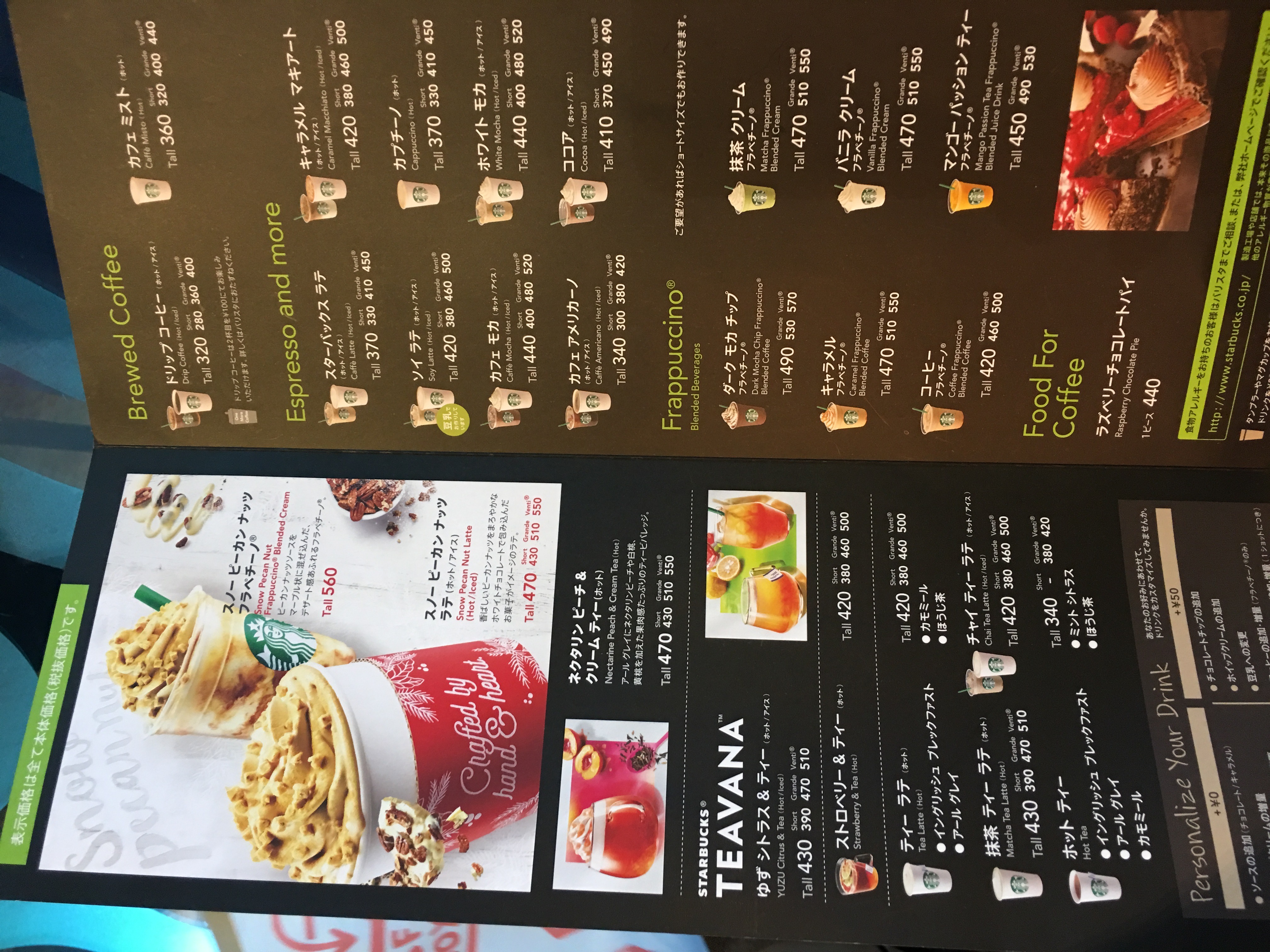
I sat in that Starbucks for two-three hours.
I was too scared to go back out into the station.
I was too scared to go into the crowds.
After sleepless night and tiny eggslut, it was too much for me.

VII. Anneannem and The Phone Call
At some point in the early afternoon, I called my grandmother to say good morning —
it was morning in Turkey by then.
She answered immediately — she always answered immediately — and asked how I was.
“Anane,” I said, “this place is nothing like Turkey. It’s nothing like Korea either.”
Korea had been my second country. Japan was my third. My grandmother was keeping track.
She asked what I meant.
I tried to explain Shinjuku — the scale, the density, the signs, the feeling of having arrived on a different planet that happened to also have coffee.
She listened.
Then she said:
“You’re in one of the safest countries in the world. And you’re hiding in a café.”
A pause.
“I didn’t expect that from you.”
And she hung up. :))
I sat for a moment.
I said to myself, out loud, almost:
Kalk! Kalk! Kalk! ( Get up! Move! ) You are in Tokyo!
Then I put my phone in my bag, picked up my jacket, and walked out into Tokyo.
VIII. Kabukichō
My hostel was in Shinjuku, in the back streets near Kabukichō — the entertainment district, and also the heart of yakuza territory. Organized crime, in the most orderly country in the world.
This is a specific combination.
Kabukichō at night: neon on every surface, lights in colors that have no names in English, pachinko parlors emitting their specific metallic roar, host clubs with men in elaborate suits standing outside calling to passersby, restaurants with plastic food displays that look more real than food.
The yakuza, I had been told, were very much present. They were also, apparently, completely uninterested in a confused twenty-three-year-old from Turkey who was clearly lost and clearly harmless.
No one bothered me. Not once. Not for the entire trip.
I walked the back streets of Kabukichō at midnight feeling, for the first time that day, completely safe.
IX. Shibuya Crossing
Shinjuku at night is a completely different creature
from Shinjuku at dawn —
still overwhelming,
but now the overwhelm was inviting
instead of terrifying.
I walked from Shinjuku to Shibuya.
This is approximately 3 kilometers. I did not know this at the time. I found out afterward. At the time, I was simply walking — following the density of people, the brightness of the lights, the general principle that interesting things are where people are going.
Shibuya Crossing is famous. You have seen photographs. The photographs are accurate. They are also completely useless.
The photographs show: an intersection, many people, neon lights.
What the photographs cannot show: the precise moment when the lights change — when traffic stops — when the crossing opens — and from every direction at once, hundreds of people begin to walk, weaving between each other, and somehow nobody collides.
I stood on the edge and watched it happen.
Then I walked into it.
The crowds moving like water around me.
No one bumped into me. No one stopped. The flow just took me in — one confused foreigner — and kept moving.
I made it to the other side.
I turned around and watched the flow come back.
And somewhere in the middle of that crossing —
between one wave of people and the next —
I fell in love with Tokyo.
Completely.
Irreversibly.
The kind of love
where you don’t even argue with yourself about it.
I thought: I don’t understand anything about this city.
I thought: I want to understand everything about this city.
I thought: I am coming back.
All three turned out to be true.
X. Twelve Times
I have been back to Japan twelve times since that morning!
Twelve!
I did not plan this. Nobody plans this.
You just go once, and then some part of you keeps finding reasons — a conference, a layover, a friend visiting, a week free in July, a no reason at all — and one day you look up and realize you have a favorite konbini, a favorite train line, a specific bench in a specific park where you always sit.
I know the train system now — which is, as I suspected on the bus, completely sufficient and slightly miraculous. A map that initially looks like someone dropped a bowl of noodles and then, over time, reveals its logic — a logic so refined that missing a train is a minor inconvenience rather than a crisis.
I know the food. I know the silence — the specific quality of Japanese public quiet, the way a city of 14 million people can feel, in certain moments, hushed.
I know the parks — Yoyogi on a Sunday, where every subculture has its own corner, all of them sharing the same park.
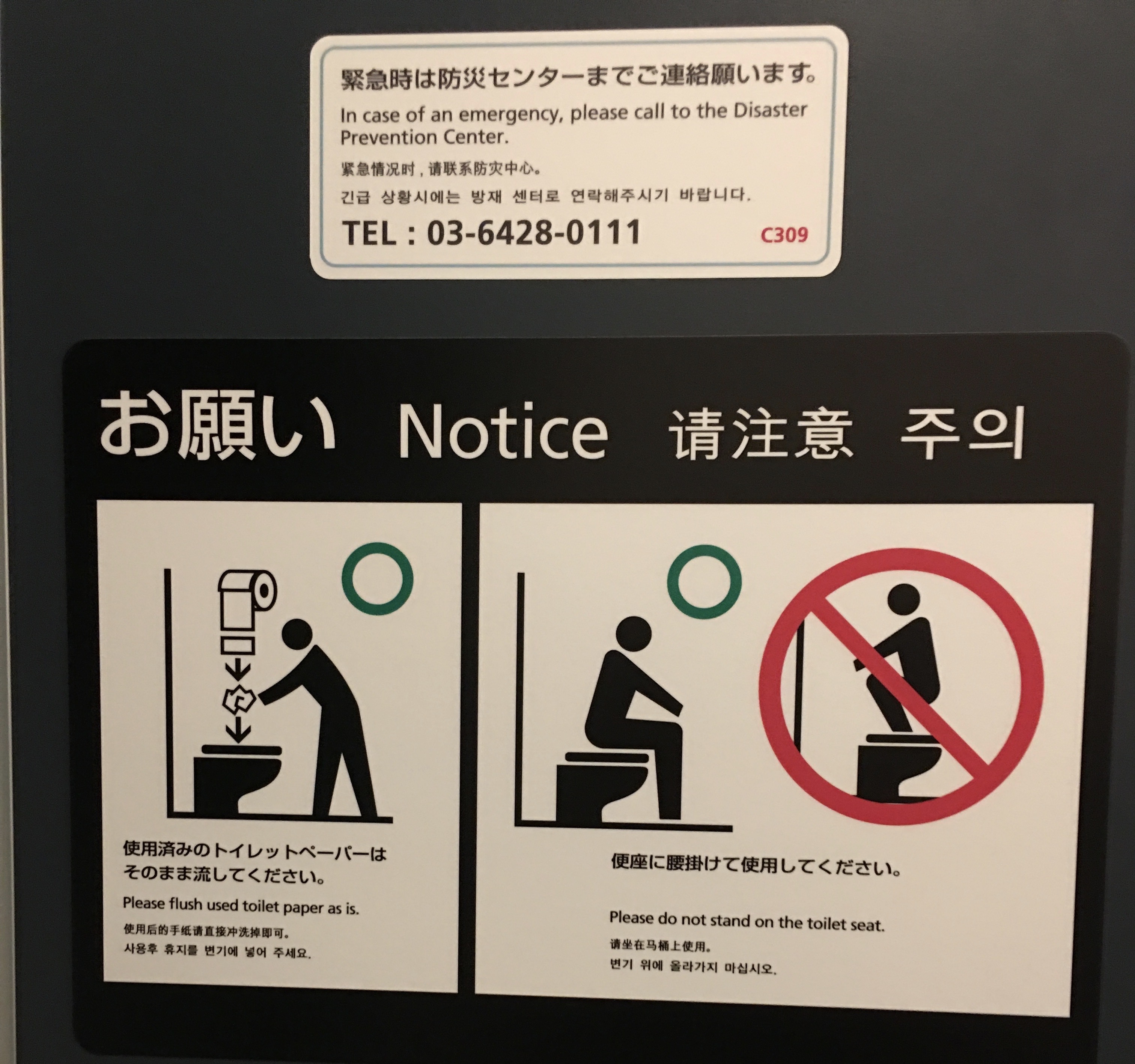
And most importantly, I know the toilets! :)) God knows how scary they are the first time!
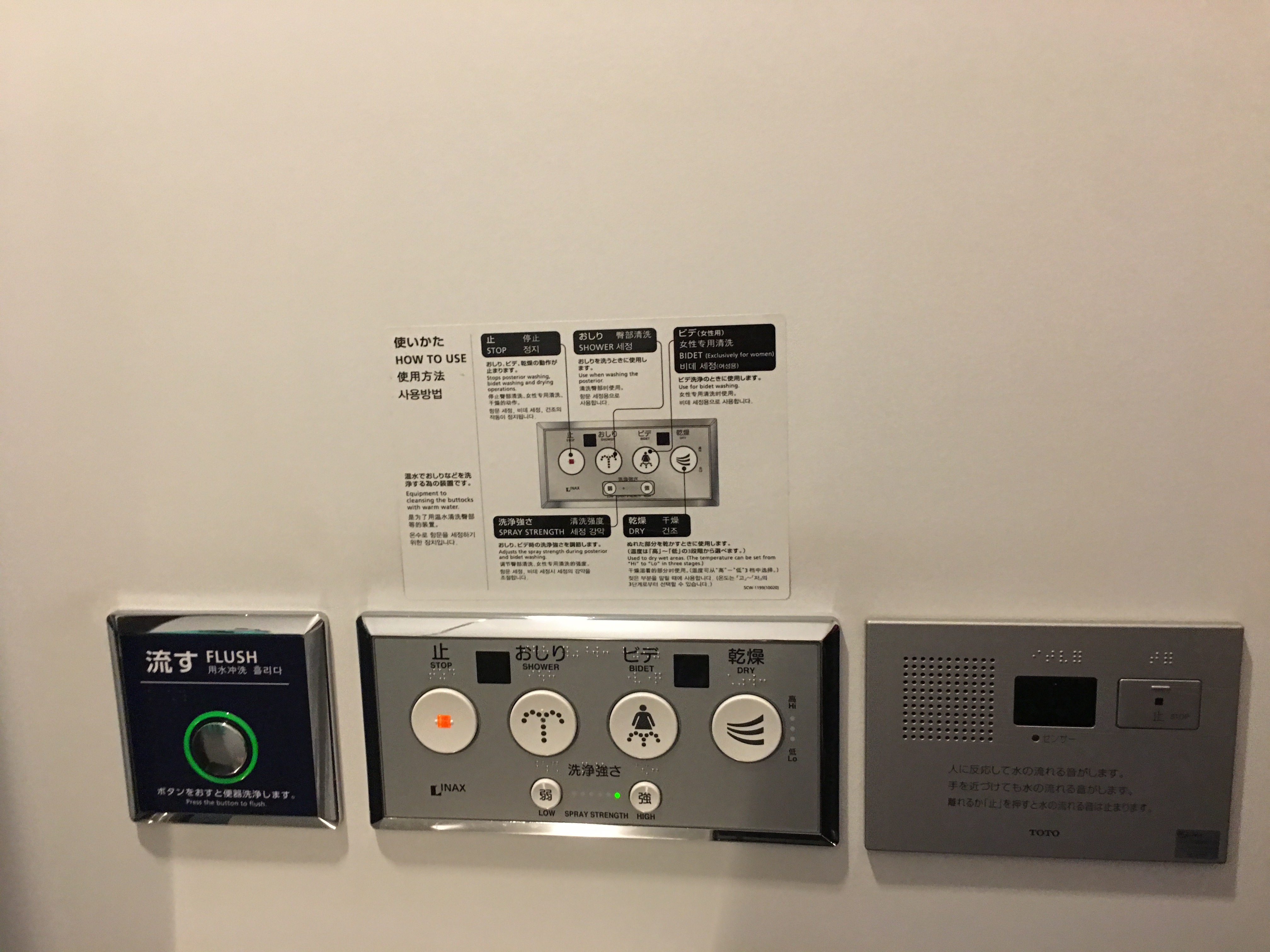
And I know the thing I felt that first morning in Shinjuku —
standing on the pavement with my brain not yet fully operational,
looking at a city that did not fit
any category I had —
the thing I felt was not just disorientation.
It was the particular feeling of encountering something genuinely,
structurally different from everything you know!
That is what Tokyo gave me on the first morning —
before I found the café, before eggslut,
before the bell I didn’t press,
before sutābakkusu,
before my grandmother told me to stop hiding.
Enjoy Reading This Article?
Here are some more articles you might like to read next: